Our Locations in the Gulf Region and Europe
The Dubai crisis a few years ago tarnished the sun-drenched image of the Gulf region for many investors and entrepreneurs. However, it would be a grave mistake to neglect this hub between Asia and Europe, despite the unfamiliar culture. As a law firm specializing in Real Estate Law, Commercial Law, Tax Law, and Inheritance Law, we would like to briefly present our perspective on key questions many Europeans have regarding the Gulf region.
Locations
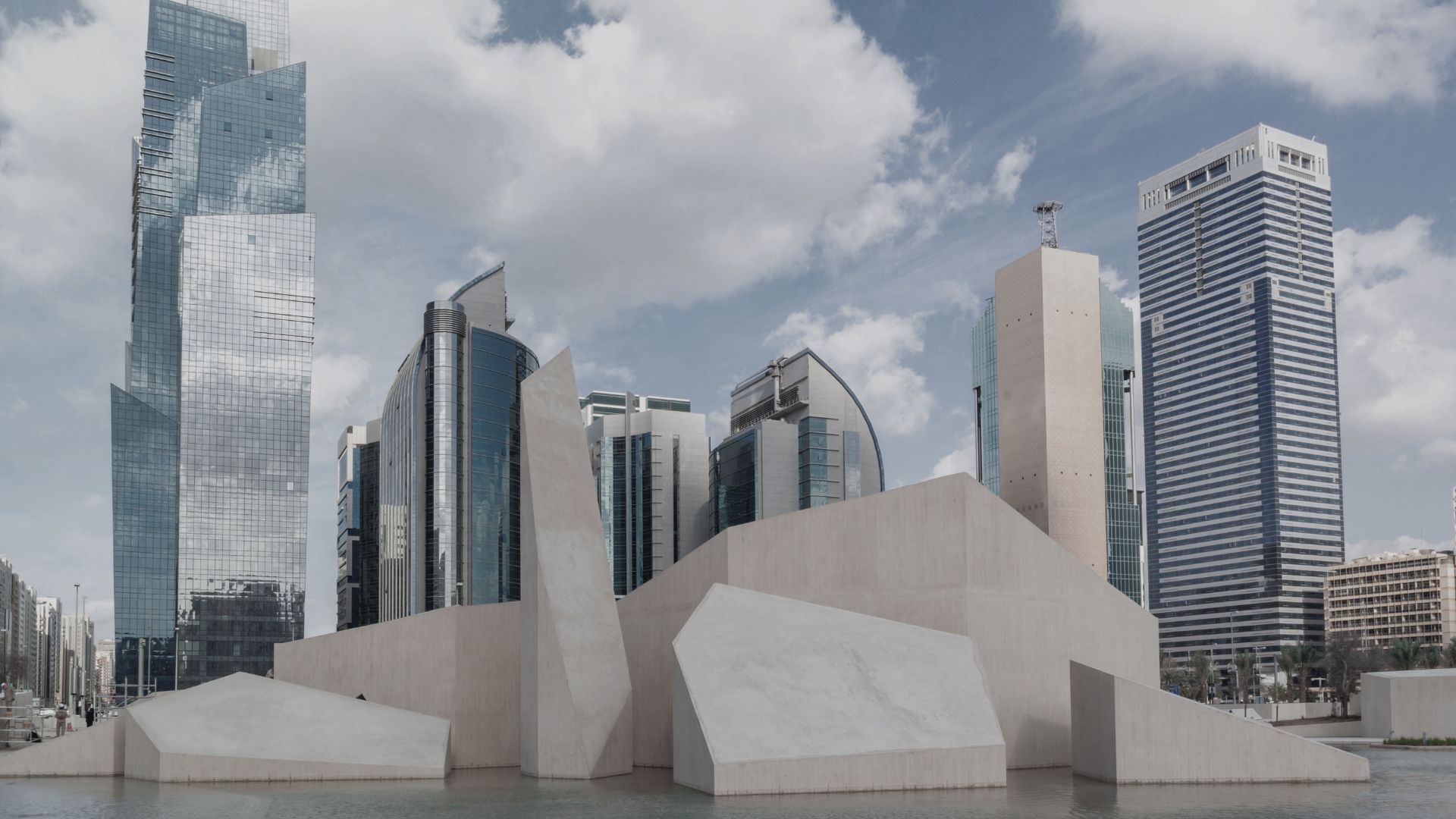
Marina Plaza
World Trade Center
Tornado Tower
Roshn Business Front
Marais
Quartiere Della Vittoria
1st District
L'Eixample
Palais an der Oper
Taunus Tower
Brandenburg Gate
Alter Wall
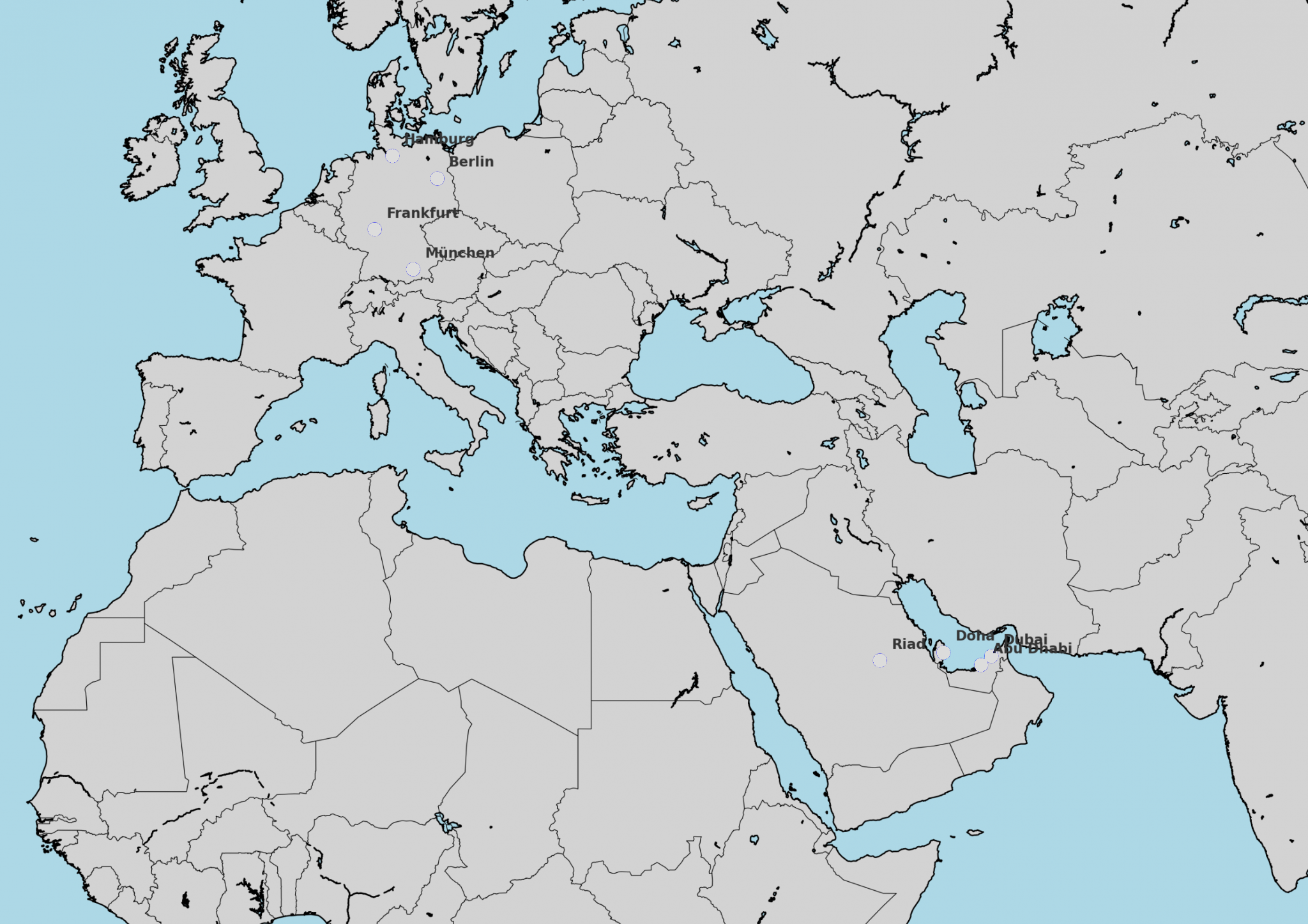
As an internationally active law firm specializing in commercial, tax, and inheritance law, we not only support you from Germany but are also directly present in the Middle East. Our offices in the most economically significant cities of the Gulf region enable personal support, deep market understanding, and short decision-making paths – be it in Dubai, Abu Dhabi, Doha, or Riyadh.
Whether company formation, contract drafting, or succession planning – we speak your language and that of the region.
Why Dubai and the UAE?
Economic hub between Europe, Asia, and Africa with excellent infrastructure and over 3.2 billion accessible consumers.
Attractive investment conditions: free trade zones, simplified permits, and tax advantages.
Growth markets in niche sectors, especially in high technology, logistics, education, and services.
High demand for quality products & know-how – German companies enjoy an excellent reputation.
Culturally relationship-oriented: Trust & personal contacts are essential for business success.
Risks present, including geopolitical tensions, inflationary pressure, and cultural pitfalls – professional guidance recommended.
0
Legal Consultations
0
Satisfied Clients
0
Ongoing Cases
0
Estate Cases
Economic Area
From our perspective, the Gulf region is indeed an interesting economic area, as it connects Europe and Asia. The locations offer a high standard of living, yet remain very attractive, whether due to the high competitive advantage in sectors such as petrochemicals, services, and logistics, or through the construction of important regional transshipment hubs targeting Africa and Asia.
Meanwhile, the Arab states, especially those in the Gulf region, are pursuing a very sophisticated industrial policy. Qatar, for example, has prioritized high technology, expanded the chemical industry, as well as the automotive and components industry, along with educational institutions and research facilities – with a clear focus on know-how transfer from the West and job creation.
Markets
While many markets and locations in the Gulf region are almost saturated, there are still interesting niche opportunities for quality providers, especially in the high-tech sector. Additionally, the region can be a good first step into the Asian market for medium-sized companies, offering relatively relaxed regulations, simplified approval procedures, and, from a European perspective, a very Western lifestyle that should make it easier to attract employees abroad.
Furthermore, in the Gulf region, one finds numerous business partners from BRIC countries who specifically use the United Arab Emirates as a base for connecting with Europe. This makes it a very favorable location to establish contacts and build initial business relationships with BRIC countries before taking the significantly more difficult step of establishing a presence in those countries. Meanwhile, the Arab states, especially those in the Gulf region, are pursuing a very sophisticated industrial policy. Qatar, for example, has prioritized high technology, expanded the chemical industry, as well as the automotive and components industry, along with educational institutions and research facilities – with a clear focus on know-how transfer from the West and job creation.
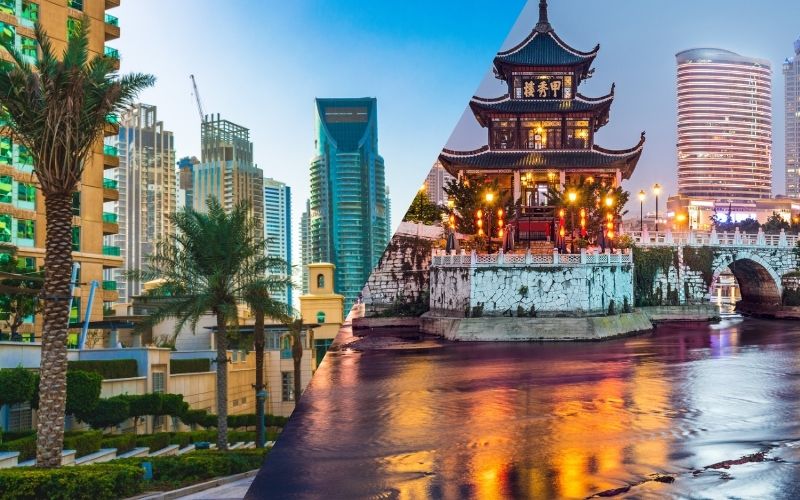
Advantages of the Gulf Region over China
In addition to its geographical location, a number of factors speak for the Gulf region, such as relaxed regulations and simplified approval procedures, numerous free trade zones, increasing diversification, and a robust economy. Added to this are excellent infrastructure, the attractiveness of the region as a workplace for foreign employees, and the large supply of skilled labor from around the world. Furthermore, the protection of intellectual property, patents, and trademarks is guaranteed. The region is fiscally attractive; its proximity to the growth markets in Asia, Europe, and Africa is also appealing. This area is home to a total of more than 3.2 billion people with a gross domestic product of over 18 trillion US dollars. And another bonus is the planned currency union of the Kingdom of Saudi Arabia, Qatar, Kuwait, and Bahrain.
Meanwhile, the Arab states, especially those in the Gulf region, are pursuing a very sophisticated industrial policy. Qatar, for example, has prioritized high technology, expanded the chemical industry, as well as the automotive and components industry, along with educational institutions and research facilities – with a clear focus on know-how transfer from the West and job creation.
Further Peculiarities
Political Risks
Political risks in Arab countries are comparable to those in China, although political risks vary greatly from country to country within the Gulf region. The region remains vulnerable to energy price fluctuations and geopolitical risks. Furthermore, inflationary pressure is rising, and most currencies are pegged to the US dollar. Added to this are high unemployment and the increasing tendency to reduce the proportion of foreigners. It is also necessary to build a competitive, performance-oriented economic and social order.
The UAE and Dubai
The United Arab Emirates and especially Dubai are certainly a special case, as nowhere else in the region is there such rapid growth – and since Dubai is oil-poor, entirely financed by foreign capital – with many mega-projects, and nowhere else has such a high degree of speculation been attracted due to the pace of development. On the other hand, Dubai has thus also become the engine of the region in terms of modernization and internationalization.
However, one must not forget that these are very traditional societies that, due to their raw material reserves, are convinced they can afford anything and are therefore often susceptible to grandiose projects, especially since they have the will to quickly catch up with the West. This rapid growth in the region naturally attracted many disreputable business partners, both locals and foreigners. For example, some Arab family groups, in Saudi Arabia for instance, significantly overextended themselves with their industrial groups and fell victim to the global economic crisis.
Regional Peculiarities
The space and society of the individual countries within the UAE are very heterogeneous. Differences run along geographical, demographic, and socioeconomic fault lines. While the traditional tripartite division of society into nomads, settled farmers, and inhabitants of old cities is no longer superficially recognizable, numerous loyalties and conflicts in these very tribal and origin-conscious societies can still be traced back to these origins.
Regarding demographic differences, these primarily concern the separation of nationals and expatriates. The former account for a good 63 percent of the population in the six Gulf states, but in the Gulf states, Kuwait, and Qatar, they make up less than 30 percent of the population.
Germany and the UAE
German products enjoy a very good reputation in the area – especially Siemens, BMW, and Mercedes. Many German service providers can also be found in the region, be they consultants, lawyers, auditors, engineering firms, architects, and so on. They, too, often enjoy a good reputation.
How Westernized are the United Arab Emirates?
Certainly, Dubai is the most Westernized in the region, while other countries and emirates are still very traditional, such as Ras Al-Khaimah, Ajman, or Oman. The latter, in particular, is a good example of a deliberate, slow development of a very traditional country. The differences in the region also concern investment conditions for companies, with all Gulf states considered economically strong and at least partially oriented towards Western standards. In recent years, the Gulf states have increasingly opened up to foreign investors, relaxed regulations, simplified approval procedures, and established more and more free trade zones.
For establishing a business or concluding initial deals in the Gulf region, time, patience, and personal presence are crucial. Many companies underestimate that in this relationship-oriented business culture, trust comes first – usually built through personal meetings, regular communication, and long-term commitment. A business deal can therefore take >months to years.
German virtues such as punctuality, reliability, and quality are highly valued. However, typical German directness and task-orientation can be perceived as impatient or arrogant. Sensitivity, respect, and intercultural awareness are therefore essential.
Middle East
Europe
Germany
Frankfurt
Taunus Tower, Taunustor 1
60310 Frankfurt
Tel.: +49 69 / 50 506 042 44
info@anwaltskanzlei-frankfurt.eu